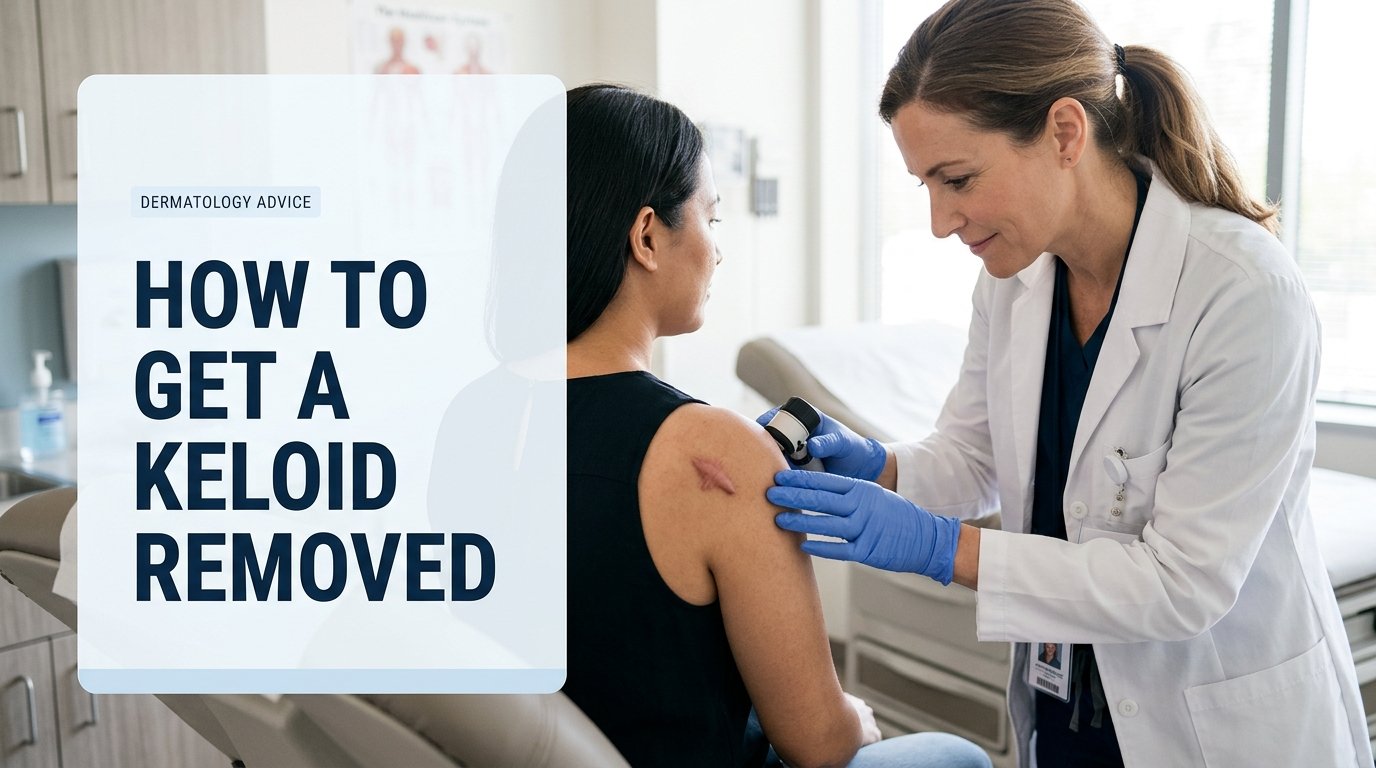
A raised scar can be uncomfortable, itchy, or difficult to ignore, especially when it appears on your ear, chest, shoulder, or face. If you’re wondering how to get a keloid removed, the good news is that several medical treatments can help flatten it, reduce discomfort, and improve its appearance.
However, keloids are different from ordinary scars. They grow beyond the original wound and can return after treatment, so choosing the right approach matters. Understanding your options can help you prepare for a dermatologist visit and avoid home remedies that may irritate your skin.
Quick Answer
The safest way to get a keloid removed is to see a dermatologist who can recommend treatment based on its size, location, and growth history. Options include corticosteroid injections, laser treatment, cryotherapy, and surgical removal combined with follow-up treatment. Avoid cutting, squeezing, or burning a keloid at home because these actions can worsen scarring.
What Is a Keloid, and Why Does It Need Special Treatment?
A keloid is a thick, raised scar that forms when the body produces too much scar tissue during wound healing. Unlike a typical scar, it can extend beyond the original injury and continue growing over time.
Keloids may develop after acne, ear piercings, surgery, burns, insect bites, or minor cuts. They can feel firm, look pink, red, brown, or darker than the surrounding skin, and sometimes cause itching or tenderness.
A keloid is usually harmless, but it may become uncomfortable or affect your confidence. Because it can grow back after treatment, the goal is often to flatten the scar, relieve symptoms, and reduce the chance of recurrence rather than promise permanent removal.
[Image: Close-up medical illustration showing the difference between a flat normal scar, a raised hypertrophic scar, and a keloid extending beyond the original wound.] Alt text: Illustration comparing a normal scar, a raised hypertrophic scar, and a keloid. File name: keloid-vs-other-scars.webp Caption: Keloids extend beyond the original wound, which helps distinguish them from many other scars.
What You Need Before Getting a Keloid Removed
Before choosing a treatment, gather a few details about your scar and prepare for a medical evaluation.
- A dermatologist appointment: A skin specialist can confirm whether the growth is a keloid and discuss suitable treatments.
- Your scar history: Note when the keloid appeared, what caused it, and whether it has grown or changed.
- A list of symptoms: Record any itching, pain, tenderness, bleeding, or repeated irritation.
- Your medical history: Mention previous keloids, skin conditions, allergies, medications, and past scar treatments.
- Your treatment priorities: Decide whether your main concern is discomfort, appearance, size, or all three.
- A realistic recovery plan: Ask about appointments, aftercare, costs, and the possibility of repeat treatment.
You do not need to buy special equipment or prepare a home removal kit. Keloid treatments should be selected and performed by qualified medical professionals.
How to Get a Keloid Removed Step by Step
1. Schedule an Evaluation With a Dermatologist
Start by arranging an appointment with a board-certified dermatologist or another qualified medical professional experienced in treating keloids.
The provider will examine the scar and ask about its history. They may also check whether it is growing, painful, or changing in appearance. An unusual or uncertain skin growth may need further evaluation before treatment.
Be sure to mention if you’ve developed keloids after previous injuries or procedures. This information can help the provider estimate your risk of developing another one.
2. Choose the Right Keloid Treatment
There is no single treatment that works best for every keloid. Your provider may recommend one method or combine several approaches.
Common options include:
- Corticosteroid injections: These injections deliver medicine into the scar to reduce inflammation and gradually flatten the tissue.
- Cryotherapy: This treatment uses extreme cold to damage scar tissue. It is often considered for smaller keloids and may cause temporary pigment changes.
- Laser treatment: Certain lasers can reduce redness, improve texture, or help flatten a scar when used as part of a treatment plan.
- Surgical removal: A clinician cuts out the scar. Surgery alone has a high risk of recurrence, so it is generally paired with another treatment.
- Pressure therapy or silicone products: Special pressure devices or medical-grade silicone sheets and gels may help manage selected scars, often as part of a longer-term plan.
Your skin tone, scar location, size, and tendency to form keloids can influence the decision. Ask about likely benefits, side effects, and the plan for preventing regrowth.
[Image: Dermatologist discussing a printed treatment plan with a patient while showing diagrams of steroid injections, laser therapy, and surgical scar treatment.] Alt text: Dermatologist explaining different medical options for keloid removal. File name: keloid-removal-treatment-options.webp Caption: The best treatment depends on the scar and your risk of developing another keloid.
3. Understand the Risks Before Treatment
Ask your provider what the procedure involves and what results are realistic. Some treatments need several visits, and a keloid may become smaller without disappearing completely.
Potential side effects depend on the method. Steroid injections can cause thinning or discoloration of nearby skin, cryotherapy can alter pigmentation, and surgery can lead to infection, wound problems, or another keloid.
Make sure you understand the estimated cost, recovery time, and follow-up schedule before agreeing to a procedure. If you have a history of poor wound healing or unusual reactions to treatment, tell your provider in advance.
4. Follow the Treatment Plan Carefully
Once you choose a treatment, follow the instructions provided by your clinician. Do not attempt to speed up the process by picking at the scar, applying harsh chemicals, or using unapproved devices.
Depending on the method, treatment may involve repeat injections, multiple laser sessions, wound care, or a pressure device. Keep every recommended follow-up appointment so your provider can check the results and adjust the plan.
If your keloid was removed surgically, ask whether additional treatment is needed soon after the procedure. Preventing recurrence is a key part of surgical care.
5. Protect the Area During Recovery
After treatment, keep the area clean and follow the wound-care instructions you receive. Avoid friction, unnecessary pressure, and activities that could pull on a healing incision.
Use silicone products, dressings, or pressure devices only as directed. If your clinician recommends sun protection, follow that advice because healing skin can develop lasting color changes after sun exposure.
Contact your healthcare provider if you develop increasing pain, spreading redness, warmth, pus, fever, or a wound that is opening. These symptoms may indicate an infection or another complication.
6. Monitor the Scar for Regrowth
Keloids can return weeks, months, or sometimes longer after treatment. Check the treated area for renewed thickening, itching, tenderness, or growth beyond the original scar.
Take occasional photographs under similar lighting if you want to track changes. Share any concerning changes with your provider instead of waiting for the scar to become large again.
Long-term monitoring is especially important after surgery. Your clinician may recommend additional injections, silicone therapy, pressure treatment, or other measures to lower the risk of recurrence.
Keloid Treatment Options Compared
The right choice depends on your scar and medical history. This table summarizes common options, their main purpose, and what to discuss with your provider.
| Treatment | Main benefit | Important consideration |
|---|---|---|
| Corticosteroid injections | Flattens scars and reduces itching | Often requires several sessions |
| Cryotherapy | Freezes and reduces small keloids | May cause permanent light spots on darker skin |
| Laser therapy | Improves redness and scar height | Often combined with other treatments |
| Surgical removal | Removes existing scar tissue | High risk of regrowth without additional treatment |
| Silicone gel or sheets | May soften or flatten scars | Use only on healed skin and as directed |
| Pressure therapy | May help prevent regrowth after surgery | Requires consistent use for an extended period |
| Combination treatment | Addresses more than one aspect of the scar | Requires a personalized treatment plan |
Common Keloid Removal Mistakes and How to Avoid Them
Even with good intentions, some approaches can irritate the skin or increase the risk of additional scarring.
- Trying to cut off the keloid: Cutting it at home can cause bleeding, infection, and more scar tissue. Have a qualified clinician assess it instead.
- Using needles or squeezing the scar: Puncturing a keloid can injure the skin without removing the underlying tissue.
- Applying harsh chemicals: Household acids, bleach, and unapproved scar-burning products can cause burns and lasting discoloration.
- Expecting surgery to solve everything: Surgical removal alone has a high recurrence risk. Ask about treatment to reduce the chance of regrowth.
- Stopping treatment too early: Some approaches require several sessions or months of follow-up. Ask your provider what to expect before starting.
- Using silicone sheets on an open wound: Wait until the skin has healed and follow your clinician’s instructions.
[Image: A clean, simple medical infographic showing safe keloid care, including clinician-guided treatment, silicone sheets on healed skin, and avoiding cutting or squeezing.] Alt text: Safe keloid care practices and actions to avoid during scar treatment. File name: safe-keloid-removal-tips.webp Caption: Professional treatment and proper aftercare can help reduce irritation and the risk of further scarring.
Safety Essentials and Practical Tips for Beginners
Keep these points in mind before and after treatment:
- Get an accurate diagnosis. A growth that looks like a keloid may have another cause. Have an unexplained or changing growth examined.
- Mention your skin tone and scarring history. Some treatments can cause lighter or darker patches, so discuss these risks before proceeding.
- Ask about recurrence prevention. This is especially important if surgery is recommended.
- Be cautious with home remedies. Oils and over-the-counter scar creams cannot reliably remove an established keloid.
- Protect healing skin. Follow wound-care instructions and use broad-spectrum sunscreen with SPF 30 or higher on exposed healing areas when appropriate.
American Academy of Dermatology+2
Seek prompt medical advice if a supposed keloid grows rapidly, develops an open sore, bleeds without an obvious reason, or changes unexpectedly. A growth that appears without a known injury also deserves evaluation.
[Image: A dermatologist reviewing follow-up photographs of a treated keloid with a patient during a routine appointment.] Alt text: Patient and dermatologist checking a keloid scar during a follow-up visit. File name: keloid-treatment-follow-up.webp Caption: Follow-up visits help your provider monitor healing and identify early signs of regrowth.
Frequently Asked Questions
Can a keloid be removed permanently?
No treatment can guarantee that a keloid will never return. Combining removal or scar-flattening treatment with appropriate follow-up care can improve the outcome, but recurrence remains possible.
Is keloid removal painful?
Pain depends on the treatment and the location of the scar. A clinician may use a local anesthetic to numb the area for procedures, while injections and freezing treatments can cause temporary discomfort.
How much does keloid removal cost?
The cost varies with the size and location of the keloid, the treatment used, the number of sessions, and your insurance coverage. Ask for an estimate that includes follow-up visits and any additional treatment needed to reduce regrowth.
Can I remove a keloid at home?
You cannot safely cut, burn, or puncture a keloid at home. Medical-grade silicone products may help selected scars, but an established keloid should be assessed by a healthcare professional before you try treatment.
What is the best treatment for an earlobe keloid?
Steroid injections, pressure earrings, cryotherapy, and surgery combined with follow-up treatment may be considered. The best option depends on the size of the keloid, previous treatments, and the risk of recurrence.
Do keloids grow back after surgery?
Yes. Keloids have a high risk of returning after surgery alone, and the new scar may be as large as or larger than the original one. Ask your surgeon about additional treatment and long-term monitoring.
When should I see a doctor about a keloid?
Make an appointment if a raised scar is growing, itching, hurting, or affecting your movement or confidence. Seek prompt evaluation for unexplained growth, rapid changes, bleeding, or an open sore.
Conclusion
The safest way to get a keloid removed is to have a dermatologist assess the scar and recommend a treatment plan that addresses both its appearance and risk of regrowth. Injections, freezing, laser therapy, and carefully planned surgery may help, but no option guarantees permanent removal.
Your next step: Schedule a dermatology appointment, bring details about your scar’s history, and ask which treatment offers the best balance of results, safety, and recurrence prevention.

Hi, I am Jack Arif, a professional researcher and author on HowMeans.com. I specialize in deep-dive research and the ‘How’ niche, creating comprehensive, step-by-step guides that break down complex topics into simple answers for you every day.