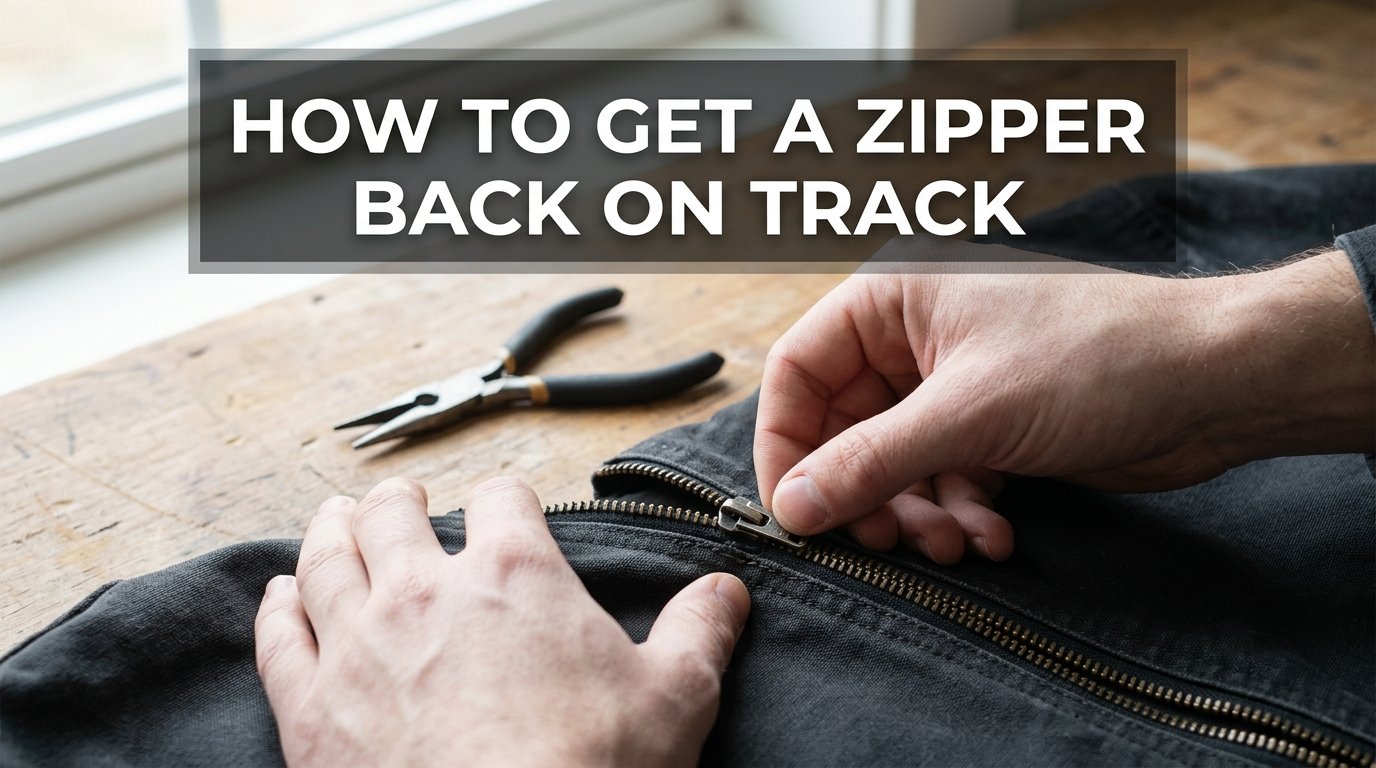
A zipper that comes off track can make your favorite jacket, jeans, backpack, or bag difficult to use. The good news is that you can often fix it at home without replacing the entire zipper or taking the item to a tailor.
Learning how to get a zipper back on track starts with finding the cause of the problem. The slider may have slipped off one side, the teeth may not line up, or fabric may be caught in the mechanism. With a few simple tools and some patience, you can often get the zipper working smoothly again.
Quick Answer
To get a zipper back on track, move the slider to the bottom of the zipper if possible. Check for trapped fabric, dirt, or damaged teeth. Carefully realign both sides and guide them evenly into the slider. Pull the slider slowly to test the repair. If the slider is loose or damaged, it may need to be replaced.
What You Need Before Fixing a Zipper
Most zipper problems require only a few household items. Gather these tools before you begin so you can work carefully without pulling or bending the zipper.
- Small pliers: Useful for gently adjusting a loose slider.
- Tweezers: Help remove fabric or thread caught in the zipper.
- Pencil: The graphite can lubricate stubborn metal zipper teeth.
- Mild soap and a soft toothbrush: Useful for cleaning dirt from the teeth.
- A small sewing kit: Helpful if a zipper stop or seam needs minor repair.
You may not need every item. Start by inspecting the zipper to determine what is wrong.
How to Get a Zipper Back on Track Step by Step
Follow these steps in order. Stop if you notice broken teeth, torn fabric, or a slider that is severely bent, since forcing the mechanism can cause more damage.
1. Inspect the Zipper to Find the Problem
Lay the item on a flat surface with the zipper facing up. Look closely at both rows of teeth, the slider, and the bottom of the zipper.
Check whether one side has slipped out of the slider, the teeth are misaligned, or fabric is stuck inside. Also look for missing teeth, a bent slider, or a damaged bottom stop.
Identifying the cause first helps you choose the right repair instead of repeatedly pulling the zipper.
2. Move the Slider to a Convenient Position
If the slider is still attached to both sides, gently move it toward the bottom of the zipper. This gives you more room to inspect and realign the teeth.
If the zipper has separated but the slider remains attached, move it back toward the point where both rows of teeth are still connected, if possible. Do not yank it past a snag.
If the slider has come completely off, skip to Step 5. You may need to reinsert it from the bottom or replace a damaged component.
3. Remove Any Trapped Fabric or Thread
Fabric caught in the slider is a common reason a zipper stops moving or comes off track.
Hold the material steady and use your fingers or tweezers to ease the trapped fabric away from the slider. If needed, move the slider slightly backward to release the material.
Avoid pulling hard on the fabric. This can tear delicate clothing, damage the zipper tape, or bend the slider.
Once the obstruction is removed, check that the teeth can move freely.
4. Realign Both Rows of Zipper Teeth
The teeth are the small interlocking parts that join the two sides of a zipper. They must meet evenly for the zipper to close properly.
Hold the two sides close together near the bottom. Match the teeth carefully, making sure neither side is twisted or stretched.
For a zipper that is still attached, guide the slider slowly over the aligned section. Keep the zipper tape flat and apply gentle, even pressure.
If the teeth separate again immediately, the slider may be too loose to hold them together. In that case, continue to Step 6 to check the slider.
5. Reinsert a Slider That Has Come Off
If the slider has slipped completely off one side, you may be able to put it back without replacing the zipper.
First, examine the bottom of the zipper. Many separating zippers have a small insertion pin on one side and a retaining box on the other. These parts help guide and secure the two sides.
For a jacket or similar separating zipper:
- Move the loose slider to the bottom of the zipper.
- Check that the insertion pin and retaining box are clean and undamaged.
- Insert the pin fully into the box, keeping both sides straight.
- Hold the bottom firmly and pull the slider upward slowly.
- Check that the teeth interlock evenly behind the slider.
If the slider has come off completely and cannot be guided back onto the teeth, the bottom stop may need to be removed and replaced. This repair can be tricky on some garments, so a tailor may be the better choice.
Do not force the slider over a bent pin or damaged retaining box.
6. Check Whether the Slider Is Too Loose
Sometimes the zipper looks correctly aligned, but the teeth separate again after the slider passes over them. This often happens when the slider has widened from regular use.
The slider is the moving metal or plastic piece that joins the teeth as you pull it. If its opening becomes too wide, it may no longer press the teeth together firmly enough.
If the slider is metal and visibly loose, small pliers may help you make a minor adjustment.
- Move the slider away from the fabric and teeth you are inspecting.
- Hold the slider steady.
- Use the pliers to apply very light pressure to the sides of the slider body.
- Test the zipper after each small adjustment.
Do not squeeze the slider hard. Too much pressure can deform it and make the zipper unusable. Avoid this adjustment on plastic sliders or delicate mechanisms.
If the teeth continue to separate, replacing the slider with the correct size and type is usually a better solution.
7. Test the Zipper and Add Lubrication if Needed
Once the zipper is back on track, move the slider up and down several times. The teeth should join evenly without catching, separating, or requiring excessive force.
If the zipper feels stiff, clean the teeth with a soft toothbrush and a little mild soap, then wipe away any residue and allow the zipper to dry.
For a stubborn metal zipper, rub the tip of a graphite pencil lightly along the teeth near the problem area. Move the slider gently to spread the graphite.
Test the zipper again. Avoid using cooking oil or greasy products, as they can stain clothing and attract dirt. If lubrication does not help, check for bent teeth, fabric obstructions, or slider damage.
Common Zipper Problems and How to Fix Them
Different zipper problems need different solutions. Use this table to identify the likely cause and the most practical next step.
| Zipper problem | Likely cause | What to do |
|---|---|---|
| One side has slipped out | Misaligned teeth or a loose slider | Realign the teeth and guide the slider carefully |
| Zipper came completely off | Slider slipped off the zipper tape | Reinsert the slider if the bottom components are intact |
| Zipper closes but opens behind the slider | Worn or loose slider | Consider adjusting a metal slider gently or replacing it |
| Slider will not move | Trapped fabric, dirt, or damaged teeth | Remove obstructions and clean the teeth |
| Zipper gets stuck at one point | Bent tooth or fabric snag | Inspect the area and remove the obstruction carefully |
| Bottom of jacket zipper will not connect | Damaged insertion pin or retaining box | Inspect the bottom components; replace damaged parts |
| Zipper keeps separating after repair | Worn slider or damaged teeth | Replace the faulty part or seek professional repair |
| Teeth are missing | Physical damage to the zipper | Replace the zipper if the missing teeth prevent proper closure |
Common Mistakes to Avoid
A simple zipper repair can become more difficult if you use too much force. Avoid these common mistakes to protect both the zipper and the item.
Pulling the Slider Too Hard
A stuck zipper may tempt you to tug harder. However, force can bend the slider, tear the zipper tape, or damage the teeth.
Instead, stop pulling and inspect the problem area. Release any trapped fabric before trying again.
Squeezing the Slider Too Tightly
Pliers can help with a loose metal slider, but excessive pressure may crush or deform it.
Make only tiny adjustments and test the zipper between attempts. If the slider is badly worn, replacement is safer than repeated squeezing.
Ignoring Broken Teeth
A zipper with missing or badly bent teeth may not work even after you realign the sides.
Inspect the full length of the zipper before starting. If the damaged section prevents the teeth from interlocking, the zipper may need professional repair or replacement.
Using Too Much Lubricant
Grease and oily products can leave stains and collect dust. They may also make the zipper harder to clean.
Use a small amount of suitable lubricant only when needed. For a metal zipper, graphite from a pencil is often a practical first option.
Practical Tips for Beginners
If this is your first zipper repair, a slow and careful approach will make the process easier.
- Work in good light. Small teeth and slider openings can be difficult to inspect in dim conditions.
- Keep the zipper flat. Twisted fabric can prevent the teeth from lining up correctly.
- Use gentle movements. Move the slider a little at a time rather than pulling it all the way in one motion.
- Check the zipper type. A separating jacket zipper works differently from a closed-end zipper on jeans or a bag.
- Test before wearing or packing. Open and close the zipper several times to make sure the repair holds.
- Know when to stop. If the teeth are damaged, the zipper tape is torn, or the slider is badly bent, replacing the faulty part may save time.
For a backpack or suitcase, check that the contents are not pushing against the zipper. Excess pressure can cause the teeth to separate even when the zipper itself is in reasonable condition.
Frequently Asked Questions
Can I fix a zipper that has come off one side?
Yes, in many cases. If the teeth and slider are in good condition, you may be able to realign the sides and guide them back into the slider. A damaged slider or bottom stop may require replacement.
Why does my zipper keep coming off track?
A zipper often comes off track because the slider is worn, the teeth are misaligned, or fabric is caught in the mechanism. If it repeatedly separates after closing, check whether the slider can still hold the teeth together firmly.
Can I fix a zipper without removing the stopper?
Often, yes. If the slider is still attached or the zipper has a suitable insertion point, you may be able to realign the teeth without removing any parts. If the slider has completely detached and there is no accessible insertion point, the stopper may need to be replaced.
Can I use pliers to fix a zipper?
Yes, small pliers can help with a loose metal slider when used carefully. Apply very light pressure and test the zipper after each adjustment. Do not squeeze plastic sliders or force a damaged mechanism.
How do I fix a zipper that separates after I close it?
This usually indicates that the slider is worn or no longer presses the teeth together properly. Check for damaged teeth first, then consider a small adjustment to a metal slider or replacement with a compatible part.
Can a zipper be fixed if some teeth are missing?
It depends on where the teeth are missing and how much damage has occurred. A zipper may still work if the damaged area is outside the section that needs to close, but missing teeth along the main closing path usually require zipper replacement.
When should I replace a zipper instead of repairing it?
Replace the zipper if multiple teeth are missing, the zipper tape is badly torn, the bottom components are broken, or the slider cannot hold the teeth together after adjustment. A tailor can often replace the zipper without requiring you to replace the entire garment or bag.
Conclusion
Getting a zipper back on track is often a simple repair when the teeth, slider, and bottom components are still in good condition. Start by removing trapped fabric, aligning the teeth, and moving the slider gently. If the zipper keeps separating, inspect the slider for wear before deciding whether a replacement is needed.
Your next step: Examine the zipper closely, identify the cause, and try the least invasive repair first.

Hi, I am Gregory Stewart, a professional researcher and author on HowMeans.com. Every day, I dive deep into new and amazing searches to uncover hidden meanings and fascinating facts, keeping you informed and updated with everything you need to know.