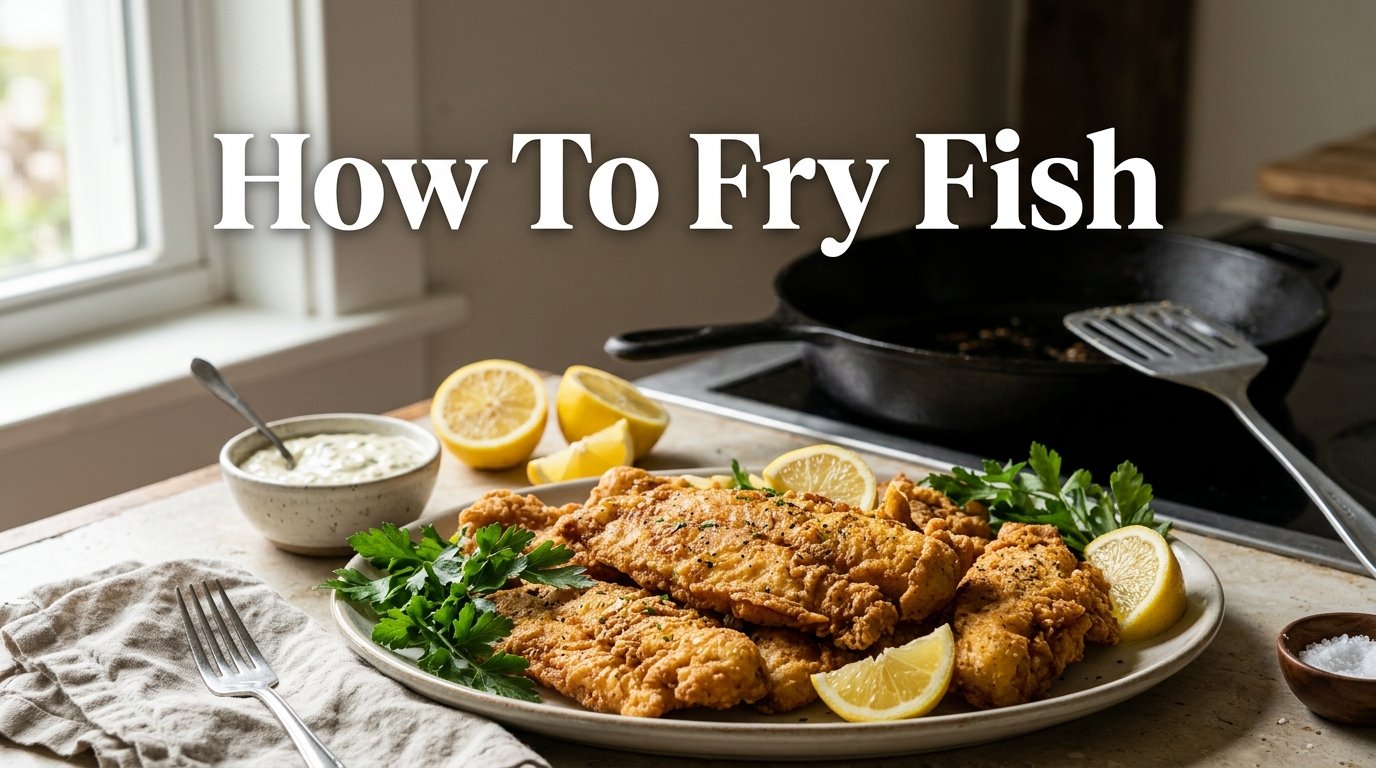
Fried fish is a simple, delicious meal when the coating turns golden and the inside stays moist and tender. If you want to learn how to fry fish at home, you only need a few basic ingredients, a good pan, and the right cooking temperature.
The trick is to start with dry fish, season it well, and avoid crowding the pan. These steps help prevent soggy breading and greasy fillets. This guide explains how to fry fish on the stovetop, how long to cook it, and how to tell when it is ready to serve.
Quick Answer: How to Fry Fish
Pat fish fillets dry and season them with salt, pepper, and your favorite spices. Coat them lightly in flour or seasoned breading, then heat about ¼ inch of oil in a skillet over medium to medium-high heat. Fry the fish for 3–5 minutes per side, depending on thickness, until golden and cooked to 145°F inside.
What You Need Before Frying Fish
Gather your ingredients and equipment before turning on the stove. Having everything ready makes cooking easier and helps you avoid overcooking the fish while searching for supplies.
Ingredients
- 1–1½ lbs fish fillets: Cod, haddock, tilapia, catfish, or pollock are good choices.
- ½ cup all-purpose flour: Creates a light, crisp coating.
- 1 teaspoon salt: Brings out the fish’s natural flavor.
- ½ teaspoon black pepper: Adds mild heat.
- 1 teaspoon paprika: Gives the coating color and a gentle smoky flavor.
- ½ teaspoon garlic powder: Adds savory flavor.
- 1 egg and 2 tablespoons water or milk (optional): Helps breadcrumbs stick to the fish.
- 1 cup breadcrumbs or cornmeal (optional): Makes a more textured, crunchy crust.
- Vegetable or canola oil: Use enough to cover the bottom of the skillet by about ¼ inch.
- Lemon wedges: For serving.
You can skip the egg and breadcrumbs if you prefer a simple flour coating. Cornmeal is especially popular for Southern-style fried fish.
Equipment
- A heavy skillet, such as cast iron or stainless steel
- Tongs or a thin spatula
- Three shallow dishes for coating
- Paper towels
- A wire rack and baking sheet for draining
- An instant-read food thermometer
A food thermometer measures the internal temperature of the fish. It is the most reliable way to check doneness, especially when you are new to frying.
Which Fish Is Best for Frying?
The best fish for frying has firm or moderately firm flesh that holds together when you flip it. Choose a variety based on the texture and flavor you enjoy.
- Cod: Mild, flaky, and ideal for thick, golden fillets.
- Tilapia: Affordable, mild, and quick to cook.
- Catfish: Firm, flavorful, and excellent with seasoned cornmeal.
- Haddock: Tender and flaky, with a clean, mild taste.
- Pollock: A budget-friendly choice with a delicate texture.
Fresh or frozen fish can both work well. If using frozen fish, thaw it completely in the refrigerator and pat it dry before coating.
[Image: Raw cod and catfish fillets beside bowls of seasoned flour, cornmeal, paprika, salt, and black pepper on a kitchen counter.]
Alt text: Fish fillets and simple seasonings prepared for frying.
File name: fish-frying-ingredients.webp
Caption: Dry fillets and measured seasonings make the preparation process easier.
How to Fry Fish Step by Step
Follow these steps for fish with a crisp outside and a moist center. The same basic method works for most white fish fillets.
1. Prepare and Dry the Fish
Place the fillets on a clean plate or cutting board. Pat both sides dry with paper towels to remove surface moisture.
This step matters because wet fish can make the coating slide off and cause hot oil to splatter. If the fillets are thick, check that they are reasonably even in thickness so they cook at a similar rate.
Remove any remaining pin bones with clean tweezers if needed.
2. Season the Fillets
Mix the salt, black pepper, paprika, and garlic powder in a small bowl. Sprinkle the seasoning evenly over both sides of the fish.
For a stronger flavor, add a little onion powder, cayenne pepper, or dried thyme. Keep the seasoning balanced so it enhances the fish instead of covering up its natural taste.
3. Coat the Fish
Put the flour in a shallow dish and mix in a little extra seasoning if desired. Press each fillet lightly into the flour, turn it over, and shake off the excess.
For a thicker, crunchier crust, use a three-step coating method:
- Dip the seasoned fish in flour.
- Dip it into beaten egg mixed with water or milk.
- Press it into breadcrumbs or cornmeal until evenly coated.
The egg layer acts as a binder, which means it helps the outer coating stick to the fish. Place the coated fillets on a plate for a few minutes before frying.
4. Heat the Oil
Pour about ¼ inch of vegetable or canola oil into a heavy skillet. Heat it over medium to medium-high heat until it reaches approximately 350°F.
If you have a thermometer suitable for measuring oil, use it to check the temperature. If not, add a tiny pinch of flour to the oil; it should sizzle gently. Do not let the oil smoke, as this indicates it may be too hot.
The correct temperature helps the coating crisp up without soaking up too much oil.
5. Place the Fish in the Pan
Carefully lower the coated fillets into the hot oil, placing them away from your body to reduce the risk of splashes. Leave space between each piece.
Cook in batches if necessary. Adding too many fillets at once can lower the oil temperature, leading to soft, greasy coating instead of a crisp crust.
[Image: Seasoned, flour-coated fish fillets being carefully placed into a skillet with hot oil, viewed from a safe distance.]
Alt text: Coated fish fillets frying in a skillet with hot oil.
File name: fish-fillets-in-hot-oil.webp
Caption: Leave space between the fillets so the oil stays hot and the coating crisps evenly.
6. Fry Until Golden Brown
Let the first side cook undisturbed for about 3–5 minutes, depending on the thickness of the fillet. When the bottom looks golden and the fish releases easily from the pan, carefully flip it with a spatula or tongs.
Cook the second side for another 3–5 minutes as needed. Thin fillets may cook faster, while thick pieces need more time.
Avoid pressing down on the fish with your spatula. This can break the fillet and squeeze out moisture.
7. Check That the Fish Is Fully Cooked
Check the thickest part of the fillet with an instant-read food thermometer. Fish should reach an internal temperature of 145°F before serving.
The flesh should also look opaque and separate easily with a fork. However, appearance alone is less reliable than checking the temperature.
If the coating is already brown but the center is not ready, lower the heat and continue cooking gently. For very thick fillets, you can finish cooking them in a preheated 350°F oven until they reach the safe internal temperature.
8. Drain and Serve
Transfer the cooked fish to a wire rack set over a baking sheet. This lets excess oil drain away while air circulates around the coating.
Paper towels can absorb excess oil, but fish left directly on them may soften underneath. Serve the fillets promptly with lemon wedges, tartar sauce, coleslaw, French fries, or your favorite side dish.
[Image: Finished golden fried fish fillets resting on a wire rack, with lemon wedges, parsley, and a small bowl of tartar sauce.]
Alt text: Crispy fried fish draining on a wire rack before serving.
File name: crispy-fried-fish-finished.webp
Caption: A wire rack helps keep freshly fried fish crisp while excess oil drains away.
How Long Does It Take to Fry Fish?
Cooking time depends on the fish’s thickness, the oil temperature, and whether the pieces have a thick breading. Use these times as starting points rather than fixed rules.
| Fish or coating | Approximate cooking time | What to check |
|---|---|---|
| Thin fillets, about ½ inch thick | 2–3 minutes per side | Golden coating and 145°F inside |
| Medium fillets, about ¾ inch thick | 3–4 minutes per side | Opaque center and safe temperature |
| Thick fillets, about 1 inch thick | 4–5 minutes per side or longer | Check the thickest part with a thermometer |
| Small catfish pieces | About 3–5 minutes per side | Even browning and 145°F inside |
| Thin flour coating | Usually 3–5 minutes per side | Light, crisp crust |
| Breadcrumb or cornmeal coating | Usually 3–5 minutes per side | Crunchy coating without burning |
These are general estimates for shallow frying. The total time can vary, so always use the internal temperature to confirm that the fish is cooked.
Common Fish-Frying Mistakes and How to Fix Them
Even a simple recipe can go wrong if the oil temperature or preparation is off. Here is how to solve the most common problems.
Why Is My Fried Fish Soggy?
Soggy fish often comes from oil that is too cool, wet fillets, or overcrowding. Pat the fish dry before coating, keep the oil near 350°F, and fry in small batches.
Drain cooked pieces on a wire rack instead of stacking them on a plate.
Why Does the Breading Fall Off?
The coating may fall off if the fish is wet, the flour layer is too thick, or you flip the fillets too early. Dry the fish, shake off excess flour, and let the coated pieces rest briefly before frying.
Wait until the crust has formed and releases easily before turning each fillet.
Why Is the Outside Brown but the Inside Raw?
The oil may be too hot, causing the coating to brown before the center cooks. Reduce the heat to medium or medium-low and allow thicker fillets more time.
Check the thickest part with a thermometer. If necessary, finish the fish in a 350°F oven.
Why Does Fried Fish Taste Greasy?
Greasy fish is often the result of low oil temperature or excessive coating. Keep the oil hot enough, remove extra flour, and avoid overcrowding the pan.
Also, allow the fish to drain properly before serving.
Safety Essentials and Beginner Tips
Frying fish is straightforward, but hot oil needs careful handling. Follow these habits every time you cook.
- Keep water away from hot oil. Water can cause oil to splatter violently. Dry the fish well and avoid adding ice crystals or wet ingredients to the pan.
- Never leave hot oil unattended. Keep children and pets away from the stove.
- Turn pan handles inward. This reduces the chance of knocking over the skillet.
- Use a thermometer. Cook fish to 145°F in the thickest part.
- Never pour water on a grease fire. Turn off the heat if safe and cover the pan with a metal lid to smother the flames. Leave it covered until cool, and evacuate and call emergency services if the fire cannot be safely controlled.
- Prevent cross-contamination. Keep raw fish, used utensils, and uncooked coatings away from cooked food. Wash your hands and clean surfaces after handling raw fish.
For a first attempt, choose medium-thickness fillets and cook two pieces at a time. You will have more room to flip them, monitor the oil, and learn how quickly your stove cooks.
Frequently Asked Questions
Can you fry fish without flour?
Yes, you can fry fish without flour. Use seasoned cornmeal, breadcrumbs, or a light batter instead, or fry the fish without a coating for a simpler result.
What is the best oil for frying fish?
Canola oil, vegetable oil, and peanut oil are good options because they work well at typical frying temperatures. Choose an oil with a high smoke point, which is the temperature at which it begins to smoke.
Should you fry fish on high or medium heat?
Medium to medium-high heat is usually best for shallow frying. Aim for oil around 350°F, adjusting the burner as needed to keep the temperature steady without burning the coating.
How do you know when fried fish is done?
Fish is safely cooked when its internal temperature reaches 145°F. The flesh should look opaque and separate easily with a fork, but a thermometer is the most reliable check.
Can you fry fish from frozen?
It is best to thaw fish completely before shallow frying. Ice and excess moisture can cause dangerous oil splattering and make the coating soggy.
How do you keep fried fish crispy after cooking?
Place cooked fillets on a wire rack and serve them as soon as possible. If you need to hold them for a short time, keep them in a 200°F oven on a rack rather than covering or stacking them.
Is it better to fry fish in butter or oil?
Oil is generally better for frying because many common cooking oils can handle higher temperatures than regular butter without burning. You can add a little butter near the end of cooking for extra flavor, but watch it carefully.
Conclusion
Learning how to fry fish comes down to a few simple habits: dry the fillets, season and coat them evenly, maintain the right oil temperature, and avoid overcrowding the skillet. Cook each piece until the coating is golden and the center reaches 145°F.
For your first batch, start with cod or tilapia and use a light flour coating. Serve the fish hot with lemon and your favorite sides for an easy, satisfying meal.

Hi, I am Mark Harris, a professional researcher and author on HowMeans.com. I deeply analyze and break down complex concepts, definitions, and processes to provide you with clear, accurate, and easy-to-understand explanations every single day.