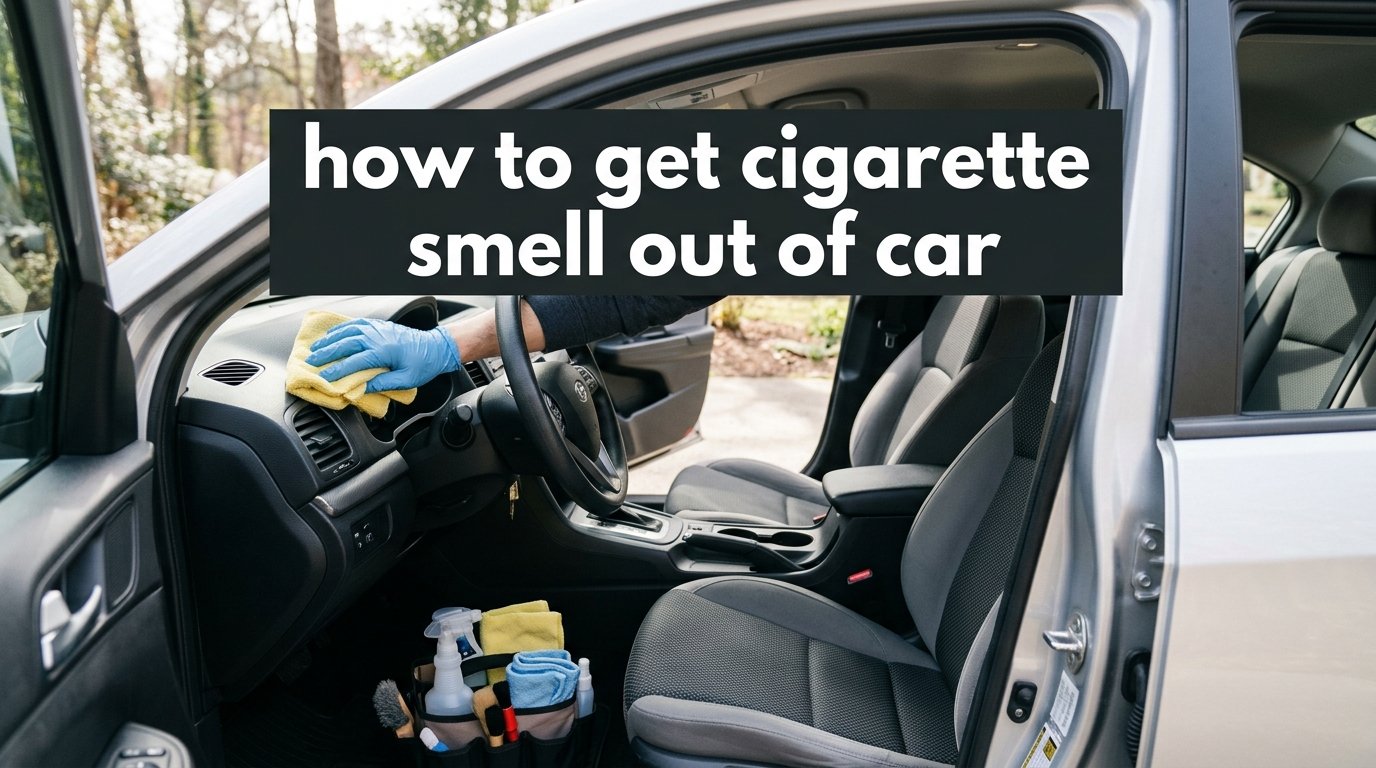
Cigarette smoke can leave a stubborn smell inside your car, even after the windows have been open for hours. The odor can cling to the seats, carpets, headliner, and air vents. If someone smoked in your car for months or years, a simple air freshener usually will not solve the problem.
Learning how to get cigarette smell out of car interiors starts with removing the source of the odor, not covering it up. With a few basic cleaning supplies and the right steps, you can make your car smell much fresher without spending money on professional detailing. The best method depends on how long the smoke has been present and which interior surfaces have absorbed it.
Quick Answer
To get cigarette smell out of a car, remove all trash and cigarette ash, vacuum the interior, and clean the seats, carpets, dashboard, and windows with suitable products. Replace the cabin air filter, clean the air vents, and let the car air out. For stubborn odors, repeat the cleaning process or consider professional detailing.
What You Need Before You Start
Gather your supplies before cleaning so you can work through the car without stopping.
- A vacuum cleaner with upholstery attachments
- Microfiber cloths
- An automotive interior cleaner
- An upholstery cleaner suitable for your seat material
- A soft detailing brush
- Glass cleaner safe for automotive windows
- A small bowl of baking soda, if desired
- A replacement cabin air filter, if needed
- Disposable gloves and a trash bag
Important: Check each product label before using it. Leather, cloth, vinyl, plastic, and suede-like materials may require different cleaning methods. Test cleaners on a small, hidden area first.
How to Get Cigarette Smell Out of Car Interiors Step by Step
1. Remove Cigarette Ash, Trash, and Other Odor Sources
Start by removing anything that may hold smoke odors. Take out trash, old receipts, floor mats, cigarette packs, and portable ashtrays.
Empty the car’s ashtray and clean it thoroughly. If it is removable, wash it according to the manufacturer’s instructions and let it dry completely before putting it back.
Check under the seats, inside the door pockets, around the center console, and in the trunk. Small amounts of ash and tobacco residue can continue to produce an unpleasant smell.
Keep the doors or windows open while working in a safe, well-ventilated location. Avoid cleaning beside open flames or while the engine is running in an enclosed space.
2. Vacuum the Entire Interior
Vacuuming removes loose ash, dust, crumbs, and debris that can trap odors. It also prepares the surfaces for deeper cleaning.
Work slowly over the seats, floor carpets, floor mats, and trunk. Move the front seats forward and backward to reach hidden areas. Use a narrow attachment around seat rails and between cushions.
If your car has fabric seats, vacuum the seams and creases carefully. Smoke residue can collect in these areas and may remain even when the visible surfaces look clean.
Remove the floor mats and vacuum both sides. If they still smell, clean them with a suitable carpet or mat cleaner and allow them to dry completely before reinstalling them.
3. Clean the Seats, Carpets, and Headliner
Fabric surfaces can absorb smoke residue, making them one of the main sources of lingering cigarette odors.
For cloth seats and carpets, apply an appropriate upholstery cleaner according to its directions. Use a soft brush where needed, then remove the cleaner and loosened dirt as instructed by the product. Avoid soaking the material, because excess moisture can damage upholstery or encourage mold growth.
Leather seats need a leather-safe cleaner rather than a general fabric shampoo. Wipe them gently and use a suitable leather conditioner if the manufacturer recommends it.
Pay special attention to the headliner, which is the fabric-covered ceiling inside your car. Smoke rises and can leave residue on this surface. Lightly dampen a microfiber cloth with a cleaner approved for the material, then gently blot a small area. Do not saturate, scrub aggressively, or pull at the fabric, because the adhesive underneath may loosen.
Let cleaned surfaces dry fully before closing the car for an extended period.
4. Wipe Down Hard Surfaces and Interior Windows
Cigarette smoke leaves a thin film on hard surfaces. This residue can continue to smell even after you have vacuumed the car.
Use an automotive interior cleaner and a clean microfiber cloth to wipe the dashboard, steering wheel, center console, door panels, cup holders, and other suitable surfaces. Follow the product directions and avoid spraying liquid directly into buttons, screens, electrical controls, or vents.
Clean the inside of every window, including the windshield and rear glass. Smoke residue on glass may appear as a cloudy film, particularly when sunlight shines through it.
Use an automotive glass cleaner and a separate clean microfiber cloth. Repeat the process if the glass still feels hazy or looks streaky.
Do not use harsh household chemicals on sensitive interior materials. Never mix cleaning products, especially bleach with ammonia-based cleaners.
5. Replace the Cabin Air Filter and Clean the Air Vents
If the cigarette smell becomes stronger when you turn on the fan or air conditioner, the ventilation system may be spreading the odor.
The cabin air filter cleans air entering the passenger compartment. If it has absorbed smoke particles and residue, replacing it may help reduce the smell.
Check your owner’s manual for the correct filter and replacement procedure. Some filters are easy to access behind the glove compartment, while others require more work.
Next, clean the accessible vent surfaces with a soft detailing brush or a microfiber cloth. Use only a small amount of cleaner on the cloth, keeping moisture away from electrical components.
Run the ventilation system in fresh-air mode with the windows open, if conditions allow. If the odor continues to come from the vents after cleaning and replacing the filter, the HVAC system may need professional cleaning.
HVAC stands for heating, ventilation, and air conditioning. It is the system that controls airflow and temperature inside your vehicle.
6. Use an Odor Absorber After Cleaning
Once you have removed the smoke residue, an odor absorber can help reduce any remaining smell.
Baking soda is a simple option for use on suitable dry surfaces. Place a small, stable container of it in the parked car, away from pedals, electronics, and areas where it could spill. You can also use a commercial automotive odor absorber according to its label.
Activated charcoal is another option. It is a porous material that can capture certain odor-causing compounds from the surrounding air. Its effectiveness depends on the product, the amount used, and the conditions inside the car.
These products work best as supporting measures, not substitutes for cleaning. Baking soda scattered onto seats or carpets may be difficult to remove, so using it in an open container is often more convenient.
Avoid strong air fresheners that simply mask the smoke smell. A heavy fragrance mixed with stale cigarette odor can make the interior less pleasant rather than cleaner.
7. Air Out the Car and Check for Lingering Odors
After cleaning, allow the car to dry and ventilate thoroughly. Open the doors or windows in a secure, dry location when weather conditions permit.
Check the seats, carpets, headliner, trunk, and ventilation system separately. This helps you identify where the remaining smell is coming from instead of repeating every cleaning step unnecessarily.
If the smell returns after the car has been closed for several hours, some residue may remain in the upholstery, headliner, or ventilation system. Repeat the relevant cleaning steps and replace the cabin air filter if you have not already done so.
For a car with years of heavy smoking, professional interior detailing may be the most practical next step. Ask the detailer to address smoke residue throughout the cabin rather than relying only on a fragrance treatment.
Which Methods Work Best for Cigarette Smell?
The most effective approach depends on where the odor is trapped. Use this table to choose the right method for your situation.
| Method | Best For | Expected Benefit | Important Caution |
|---|---|---|---|
| Vacuuming | Ash, dust, and loose debris | Removes loose odor sources | Use attachments around seams |
| Upholstery cleaning | Cloth seats and carpets | Removes embedded residue | Avoid soaking the fabric |
| Leather-safe cleaner | Leather seats | Cleans smoke film safely | Avoid harsh chemicals |
| Interior surface cleaner | Dashboard and door panels | Removes sticky residue | Protect screens and electronics |
| Glass cleaner | Interior windows | Removes smoke film and haze | Use an automotive-safe product |
| Cabin air filter replacement | Odor from ventilation | Reduces contaminants trapped in the filter | Install the correct filter |
| Baking soda | Mild lingering odors | May help absorb some odors | Keep it contained and secure |
| Activated charcoal | Residual cabin odors | Can capture certain odor compounds | Results vary by product |
| Professional detailing | Heavy, persistent smoke odor | Provides deeper cleaning options | Confirm which surfaces and systems are treated |
Common Mistakes and How to Fix Them
Using Air Freshener Before Cleaning
A fragrance may hide the smell temporarily, but it does not remove the smoke residue.
Fix: Clean the interior first, then use an odor absorber if needed.
Spraying Too Much Cleaner
Excess liquid can soak upholstery, damage adhesives, or leave a musty smell.
Fix: Apply the amount recommended on the product label. Blot fabric surfaces gently and allow them to dry completely.
Forgetting the Headliner
The ceiling is easy to overlook, yet it can hold smoke residue that continues to affect the whole cabin.
Fix: Inspect it and clean gently with a compatible product. Avoid aggressive scrubbing or excessive moisture.
Ignoring the Air Conditioning System
If the smell returns when the fan runs, cleaning the seats alone may not solve the problem.
Fix: Replace the cabin air filter, clean accessible vents, and seek professional HVAC cleaning if necessary.
Mixing Cleaning Products
Combining household cleaners can create dangerous fumes or damage vehicle surfaces.
Fix: Use one suitable product at a time, follow its label, and never mix chemicals.
Practical Tips for Beginners
- Work from top to bottom. Clean the headliner carefully, then the dashboard and seats, and finish with the carpets.
- Use separate cloths. Keep glass-cleaning cloths separate from cloths used on greasy or dirty surfaces.
- Test hidden areas first. A cleaner that works on one material may stain or discolor another.
- Allow enough drying time. Damp upholstery can develop a musty odor that makes it harder to tell whether the cigarette smell is gone.
- Keep the cabin ventilated. Fresh air helps remove residual odors while surfaces dry.
- Avoid ozone generators as a DIY shortcut. Ozone can irritate the lungs and damage some materials. If an ozone treatment is considered, use a qualified professional who follows appropriate safety procedures and ensures the vehicle is unoccupied during treatment.
If you recently bought a used car that smells like cigarettes, inspect the headliner, seat seams, trunk, and ventilation system before deciding that an air freshener is enough. Multiple odor sources often explain why a quick cleaning fails.
Frequently Asked Questions
How long does it take to get cigarette smell out of a car?
A lightly affected car may smell much fresher after a few hours of cleaning and ventilation. A vehicle exposed to cigarette smoke for years may need repeated cleaning or professional detailing over several days.
Does baking soda remove cigarette smell from a car?
Baking soda may help reduce mild lingering odors, but it cannot reliably remove smoke residue embedded in upholstery or ventilation components. Clean the affected surfaces first for better results.
Will the cigarette smell go away if I leave my car windows open?
Opening the windows helps ventilate the cabin, but it usually will not eliminate odors trapped in seats, carpets, and the headliner. Combine ventilation with thorough cleaning for a more lasting improvement.
Why does my car still smell like cigarettes after cleaning?
Smoke residue may remain on the headliner, inside seat seams, in the trunk, or in the ventilation system. Recheck these areas and replace the cabin air filter if needed.
Can I use vinegar to remove cigarette smell from my car?
Vinegar may help with some household odors, but it is not the best first choice for every automotive surface. Use a cleaner designed for the material, and never mix vinegar with bleach or other cleaning products.
Does replacing the cabin air filter remove cigarette smell?
Replacing a smoke-contaminated cabin air filter can help, especially when the odor becomes noticeable as air flows through the vents. However, it will not remove residue that has built up on seats, carpets, or other interior surfaces.
When should I hire a professional to remove cigarette smell?
Consider professional detailing if the smell remains after a thorough interior cleaning and filter replacement. This is especially useful for heavily smoked-in vehicles or when the odor appears to come from inaccessible parts of the ventilation system.
Conclusion
The best way to get cigarette smell out of your car is to remove the smoke residue from every affected surface. Start with trash removal and vacuuming, clean the upholstery and hard surfaces, replace the cabin air filter, and allow the interior to dry and air out.
Your first step: Remove the trash and ash, then inspect the seats, headliner, and vents to identify where the odor is most likely coming from. A targeted cleaning is more effective than covering the smell with perfume.

Hi, I am Mark Harris, a professional researcher and author on HowMeans.com. I deeply analyze and break down complex concepts, definitions, and processes to provide you with clear, accurate, and easy-to-understand explanations every single day.