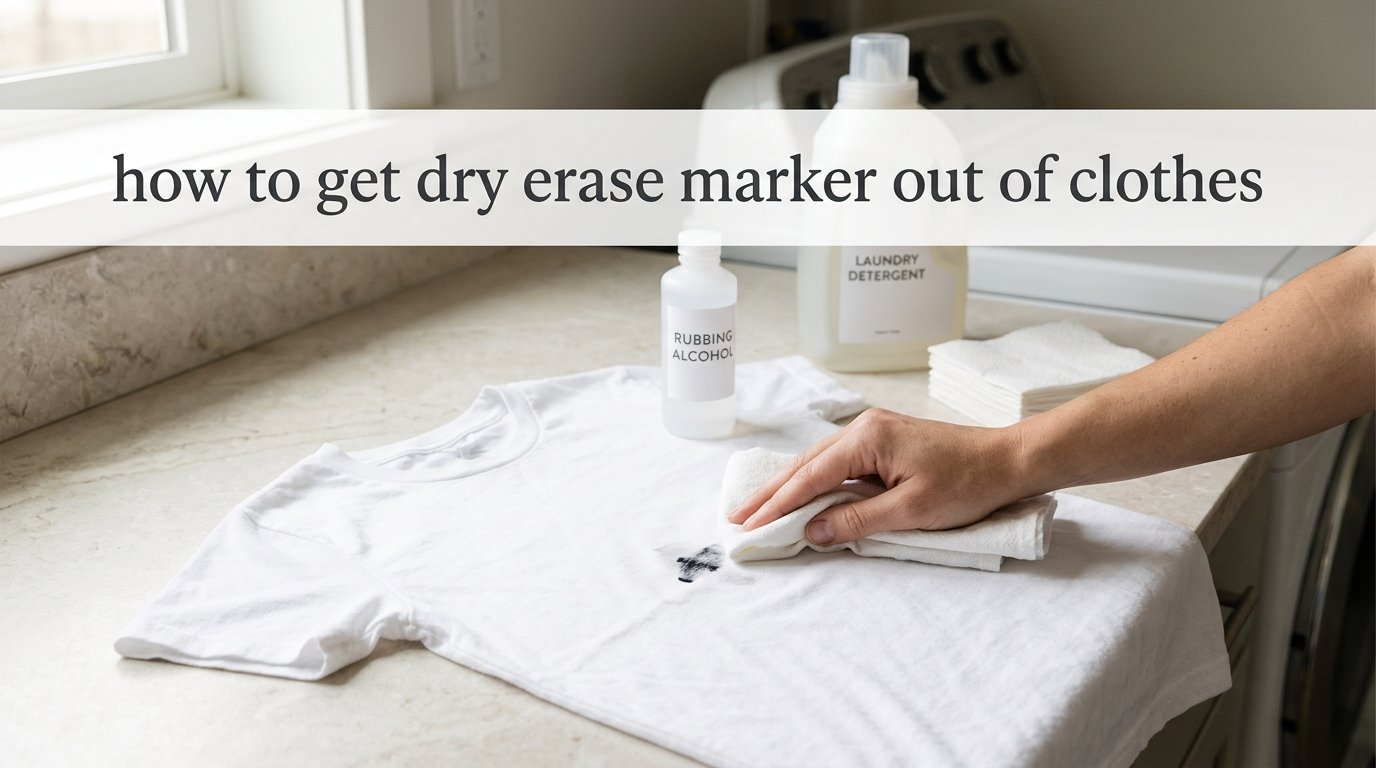
Dry erase marker stains can look stubborn, especially on a favorite shirt, pair of jeans, or school uniform. If you are wondering how to get dry erase marker out of clothes, the good news is that you can often remove the stain with common household supplies.
The key is to act quickly, avoid rubbing the ink deeper into the fabric, and choose a cleaning method that suits the material. With the right steps, you can lift much of the ink before it sets and help prevent permanent damage to your clothing.
Quick Answer
To get dry erase marker out of clothes, place a paper towel under the stain and gently blot it with rubbing alcohol using a clean cloth. Move to a fresh area of the towel as the ink transfers. Rinse with cold water, apply liquid laundry detergent, and wash according to the care label. Air-dry and check before using heat.
What You Need Before You Start
Gather these supplies before treating the stain:
- Rubbing alcohol, preferably 70% isopropyl alcohol
- White paper towels or clean white cloths
- Liquid laundry detergent
- Cold water
- A small bowl or sink
- Cotton swabs for small stains, if needed
- A soft-bristled brush for sturdy fabrics, if needed
You may not need every item. Rubbing alcohol is often a useful first choice because many dry erase markers contain alcohol-soluble dyes and other ingredients that alcohol can help dissolve.
Before applying any cleaner, check the garment’s care label and test the product on a hidden area. Some fabrics and dyes may react poorly to alcohol.
How to Get Dry Erase Marker Out of Clothes Step by Step
Follow these steps to remove the stain while protecting the fabric.
1. Blot the Stain as Soon as Possible
If the marker has just touched your clothing, start by blotting the stained area with a clean, dry paper towel.
Press gently to absorb excess ink. Do not scrub, rub, or spread the mark across the fabric.
If the ink is still wet, quick action can help keep it from spreading. If the stain has dried, do not worry. You can still try the cleaning method below.
2. Place a Paper Towel Behind the Stain
Put several layers of clean paper towels beneath the stained part of the garment. The towels should sit directly behind the ink so they can absorb the color as it comes out.
This step is important because dissolved ink can transfer to the other side of the fabric. Without an absorbent layer underneath, you may spread the stain instead of removing it.
For a shirt, you can place the towels inside the shirt between the front and back panels. For pants, position them inside the stained leg.
3. Test Rubbing Alcohol on a Hidden Area
Apply a small amount of rubbing alcohol to an inconspicuous spot, such as an inside seam or hidden hem.
Wait briefly and check for color transfer, fading, or fabric damage. If you notice an unwanted change, stop and choose a fabric-appropriate cleaning method instead.
If the test area looks fine, dampen a clean white cloth or cotton swab with rubbing alcohol. Avoid pouring large amounts directly onto the garment.
Keep rubbing alcohol away from flames, sparks, and heat because it is flammable. Work in a well-ventilated area.
4. Blot the Ink with Rubbing Alcohol
Gently dab the stained area with the alcohol-dampened cloth. Start around the edges and work toward the center to reduce the chance of spreading the mark.
As the ink transfers, move to a clean section of the cloth or replace the paper towels underneath. Continue with small amounts of alcohol rather than soaking the entire garment.
Do not scrub aggressively. Repeated gentle blotting is usually safer for the fibers and helps you see whether the stain is lifting.
If the mark remains, repeat the process a few times, provided the fabric tolerates the treatment. Stop if the garment’s color begins to transfer or the material shows signs of damage.
5. Rinse the Area with Cold Water
Once you have removed as much ink as possible, rinse the stained area with cold water.
If practical, rinse from the back of the fabric so the water pushes loosened ink out rather than through the garment. Keep rinsing until the excess alcohol and loosened color are washed away.
Avoid hot water at this stage. Heat can make some stains harder to remove, particularly if ink residue remains.
6. Apply Liquid Laundry Detergent
Work a small amount of liquid laundry detergent into the damp stain. Use your fingertips to spread it gently across the affected area.
Let the detergent sit for about 5–10 minutes, unless the product label recommends otherwise. For sturdy fabrics, you can use a soft-bristled brush with light pressure, but avoid brushing delicate materials.
Laundry detergent helps remove remaining ink residue, oils, and other substances left behind after the alcohol treatment.
Rinse the area again with cool water if needed, then check the stain before washing the entire garment.
7. Wash the Garment and Air-Dry It
Wash the clothing according to its care label, using the recommended detergent and the coolest suitable water setting.
Before putting the garment in the dryer, inspect the stained area in good light. If any ink remains, repeat the treatment instead of drying it with heat.
Air-drying is the safer choice until you are sure the stain is gone. A hot dryer or iron may make leftover marks more difficult to remove.
Which Stain Removal Method Should You Use?
Rubbing alcohol is a useful starting point for many dry erase marker stains, but the best approach depends on the fabric, the age of the mark, and the garment’s care instructions.
| Situation | Recommended approach | Important caution |
|---|---|---|
| Fresh marker stain | Blot, then use tested rubbing alcohol | Do not rub the wet ink |
| Dried marker stain | Apply rubbing alcohol in small amounts and blot repeatedly | Several treatments may be needed |
| Cotton T-shirt | Test alcohol, blot, then wash with detergent | Check colored fabric for fading |
| Denim jeans | Blot with alcohol and wash according to the label | Avoid excessive scrubbing |
| Polyester clothing | Test a small area, then blot gently | Heat may damage some polyester fabrics |
| Delicate or dry-clean-only clothing | Consult a professional cleaner | Alcohol may damage finishes or dyes |
| Large stain | Work in small sections with fresh towels | Prevent ink from spreading |
| Stain remains after washing | Repeat pretreatment before drying | Do not use a hot dryer |
| Alcohol causes color transfer | Stop and rinse the area | Consider professional cleaning |
Common Mistakes to Avoid
Even a good stain remover can cause problems if you use it incorrectly. Avoid these common mistakes when treating marker ink.
Rubbing the Stain Too Hard
Scrubbing can push ink deeper into the fabric and spread it to a larger area. It can also damage delicate fibers.
How to fix it: Use gentle, repeated blotting with a clean cloth. Replace the absorbent towels as they pick up ink.
Using Hot Water Too Soon
Hot water is not the best first step when marker ink is still present. It may make some remaining stains more difficult to remove.
How to fix it: Start with cold water and treat the stain before washing. Follow the garment’s care label throughout the process.
Putting the Clothing in the Dryer Too Early
A garment may look clean when wet, even if a faint mark remains. Dryer heat can make the remaining stain harder to treat.
How to fix it: Inspect the fabric after washing and let it air-dry until you confirm the ink is gone.
Using Too Much Cleaning Product
Pouring alcohol directly onto a large area may spread the stain and expose more of the fabric to the solvent.
How to fix it: Apply small amounts to a cloth or cotton swab. Keep paper towels beneath the stain and work gradually.
Mixing Different Cleaning Products
Combining cleaners can damage clothing or create harmful fumes, depending on the ingredients. Never mix rubbing alcohol with bleach or other cleaning products.
How to fix it: Use one product at a time, rinse thoroughly between treatments, and follow the product labels.
Practical Tips for Beginners
A few simple habits can make stain removal easier and reduce the risk of damaging your clothes.
- Check the fabric first. Cotton and denim may tolerate treatment differently from silk, wool, or clothing with special finishes.
- Use white cleaning materials. White cloths and paper towels make it easier to see transferred ink and reduce the risk of color bleeding from the cleaning material.
- Treat the stain from both sides when appropriate. Once you have blotted the front, inspect the back and gently treat any transferred ink.
- Keep the stain contained. Avoid saturating a large section of clothing when only a small area is marked.
- Repeat before adding stronger products. Several gentle treatments may work better than aggressive scrubbing.
- Get help with valuable garments. If the item is expensive, delicate, or labeled dry-clean-only, a professional cleaner may be the safest option.
Remember that not all dry erase markers have the same formula. Some stains may disappear quickly, while others leave a faint shadow even after careful treatment.
Frequently Asked Questions
Does rubbing alcohol remove dry erase marker from clothes?
Rubbing alcohol can help dissolve the ink in many dry erase markers, making it easier to blot the stain away. Always test it on a hidden area first because it can affect certain dyes, finishes, and fabrics.
Can you get dry erase marker out of clothes after washing?
Yes, it may still be possible to remove the stain after washing, especially if the garment has not been exposed to dryer heat. Pretreat the mark with a fabric-safe method, rinse, and wash again according to the care label.
How do you remove dry erase marker from a white shirt?
Place paper towels behind the stain and gently blot it with rubbing alcohol after testing the fabric. Rinse with cold water, apply laundry detergent, and wash as directed. Avoid bleach unless the care label permits it and the product is appropriate for the garment.
How do you get dry erase marker out of jeans?
For most washable denim, test rubbing alcohol on an inside seam, then blot the stain with a clean white cloth. Rinse with cold water, pretreat with liquid detergent, and wash according to the jeans’ care instructions.
Will dry erase marker come out of clothes on its own?
It might fade somewhat during washing, but you should not rely on ordinary laundering alone. Pretreating the stain before washing generally gives you a better chance of removing the ink.
Can hairspray remove dry erase marker stains?
Hairspray is not the best first choice because modern formulas vary and may contain ingredients that leave residue. Rubbing alcohol, when suitable for the fabric, is generally a more direct option for treating many dry erase marker stains.
What should I do if the stain will not come out?
Repeat the treatment if the fabric tolerates it, and check the garment before applying heat. If the stain persists or the fabric is delicate, consult a professional cleaner rather than trying increasingly harsh chemicals.
Conclusion
To get dry erase marker out of clothes, start by blotting the ink, use rubbing alcohol only after testing the fabric, rinse with cold water, and pretreat with laundry detergent. Wash according to the care label and air-dry the garment while checking for any remaining marks. Acting quickly and avoiding heat can improve your chances of restoring your clothing.

Hi, I am Mark Harris, a professional researcher and author on HowMeans.com. I deeply analyze and break down complex concepts, definitions, and processes to provide you with clear, accurate, and easy-to-understand explanations every single day.